salakhalimunmountain.com – Trekking through the lush, biodiverse wilderness of Mount Salak requires an adaptable approach to campcraft, especially when it comes to setting up a comfortable night’s shelter. With the mountain’s steep volcanic slopes, damp forest floor, and dense understory, off-ground sleeping systems like hammocks paired with A-frame tarps have become a preferred setup for seasoned rainforest explorers. However, hanging a hammock securely in a dynamic tropical ecosystem is not as simple as finding two convenient trunks. Selecting A-frame hammock trees in Salak forest requires a trained eye for tree health, structural stability, spacing, and micro-environmental safety.
Mount Salak’s rainforest canopy is home to a vast variety of flora, ranging from massive hardwood giants to soft-wooded fast-growing pioneer species, shallow-rooted trees on muddy inclines, and tangle-prone palms. Choosing the wrong anchor points can lead to equipment failure, sagging tarps, or severe safety hazards from falling deadwood—commonly referred to as “widowmakers.” By understanding tropical tree biology and applying a methodical inspection routine, you can select rock-solid anchor trees that ensure a dry, peaceful, and elevated night’s rest.
Evaluating Tree Health and Structural Integrity
The cardinal rule of hammock camping is never to hang your suspension system from a dead, dying, or structurally compromised tree. In high-humidity tropical forests, internal wood decay can occur rapidly under intact-looking bark, making visual tree inspection your primary safety assessment before setting up camp.
Before testing a tree’s stability, perform a thorough 360-degree inspection from root base to upper canopy. Look upward into the crown for dead branches, hanging vines that could drop limb fragments in wind gusts, or severe canopy lean. Examine the trunk for fungal growth, deep termite channels, hollow cavities, or peeling bark near the suspension zone. A healthy tree should have a firm, intact trunk, well-anchored roots, and vibrant foliage throughout its upper canopy.
Choosing the Right Trunk Diameter and Species
Not all trees offer equal load-bearing capacity. Avoid young saplings or thin trees that bend under tension, as well as oversized ancient trunks that make wrapping tree straps difficult or impossible.
Target mature, living trees with a trunk diameter of at least 15 to 30 centimeters (roughly the thickness of a solid telephone pole or adult thigh). Look for hard-barked forest species such as native oak or chestnut relatives, which offer dense wood grain and thick, durable bark. Steer clear of soft-stemmed wild banana plants, hollow bamboo stalks, or trees heavily coated in loose, slippery moss layers that allow tree straps to slide downward under weight.
Calculating Optimal Spacing and Geometry for A-Frame Tarps
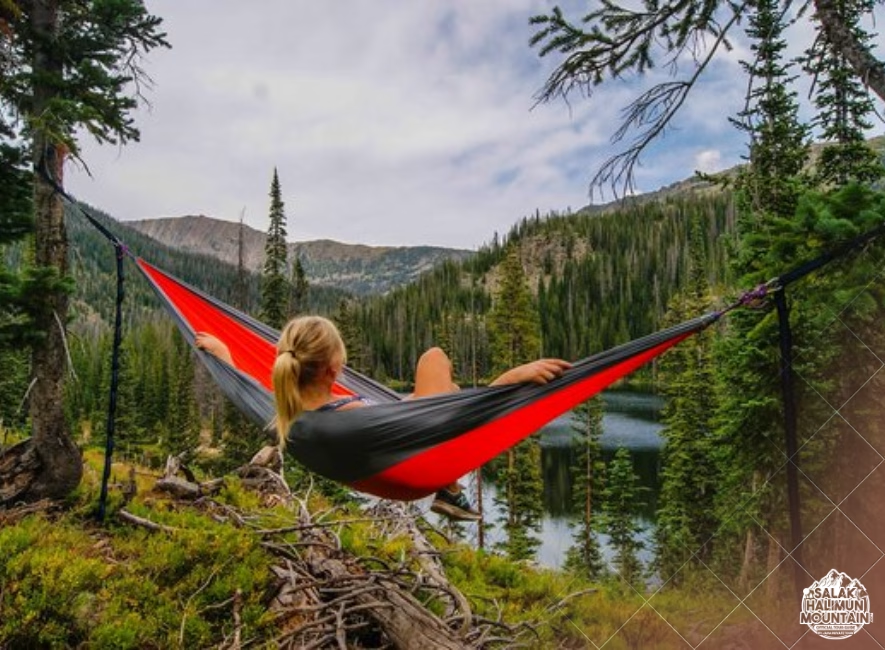
Once you identify healthy trees, the next step is evaluating the distance and angle between them. For an A-frame hammock setup, proper spacing between your anchor trees ensures both a flat, ergonomic lay inside your hammock and sufficient coverage under your rain tarp.
The ideal distance between two anchor trees generally ranges from 4 to 5.5 meters (roughly 12 to 16 feet). If the trees are too close, your hammock will sag into a deep banana shape, putting pressure on your back and leaving your tarp slack. If the trees are too far apart, you will need to attach your straps much higher up the trunk to maintain a comfortable 30-degree suspension angle, putting excessive lateral stress on both the trees and your suspension hardware.
Ensuring Ample Tarp Coverage Overhead
An A-frame tarp pitch relies on a tight, continuous ridgeline suspended above your hammock line. When selecting your anchor trees, make sure there are no large side branches, jutting roots, or dense vine clusters blocking the direct line between the two trunks at a height of 1.8 to 2.2 meters.
Ensure that the distance between the two trees allows your tarp to extend past both ends of your hammock gathered-ends by at least 30 to 50 centimeters. This coverage overhang prevents driving rainforest rain from running down your suspension lines and soaking your insulation during midnight downpours.
Terrain Slope and Ground Clearance Considerations
Mount Salak’s topography consists largely of steep volcanic spurs and rolling ridge shoulders. Hanging a hammock on sloped ground requires careful attention to ground clearance and entry/exit safety.
When selecting trees on an incline, position your setup so that you can easily step into and out of the hammock from the uphill side. Hang your hammock high enough so that when you sit inside and compress the suspension, your bottom remains at least 45 to 50 centimeters off the ground. This prevents your hammock from sagging onto hidden rocks, sharp root knees, or damp undergrowth while ensuring you stay well clear of surface runoff during heavy downpours.
Scanning for Micro-Hazards and Wildlife Traps
Before committing to your chosen tree pair, scan the ground and immediate surroundings for micro-hazards. Avoid hanging directly over active ant nests, wasp burrows, or slippery muddy depressions that fill with standing water during rain storms.
Inspect the bark surface around your strap placement zone for stinging caterpillars, biting ants, or sharp thorny vines like wild rattan. Clearing light debris from your foot placement zone ensures safe footing when getting out of your hammock in the middle of the night.
Tree Protection and Low-Impact Wilderness Ethics
As responsible trekkers, protecting the living forest is just as important as ensuring personal safety. Using improper suspension gear can strip delicate cambium bark layers from tree trunks, disrupting nutrient flow and leaving trees vulnerable to fungal infections.
Never use narrow cordage, bare paracord, or wire directly around a tree trunk. Always use wide polyester or Dyneema webbing tree straps (at least 2.5 to 3.8 centimeters wide) to distribute your body weight evenly across the trunk surface. Wide tree huggers prevent bark damage, leave no trace on the forest, and ensure that Mount Salak’s ancient trees remain healthy for years to come.
Selecting the right A-frame hammock trees transforms your rainforest camp into an elevated, secure sanctuary. By inspecting tree health, calculating proper spacing, managing slope angles, and using protective tree straps, you master one of the most comfortable and rewarding shelter techniques in the tropical wild.
So, if you’re ready to explore the wonders of Mount Salak Halimun, head over to our ONLINE BOOKING PAGE and let’s start planning your adventure. Or simply CLICK THIS LINK to chat with us on WhatsApp.
With our team, you’re not just getting a guide; you’re gaining a local friend who will ensure your trip is nothing short of extraordinary.